
Cliff Swallow Monitoring
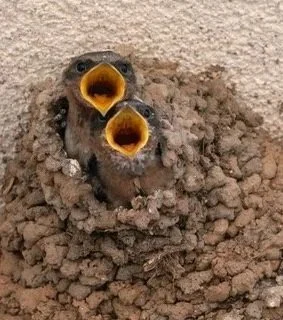
Photo: Carol Ann Fugagli
Our local Cliff Swallow monitoring project on the Western New Mexico University campus in Silver City documents the breeding success of these birds. For several years, trained volunteers have observed and recorded the breeding biology of returning Cliff Swallows to estimate the number of young fledged from nests located on campus buildings.
2026 is an even-numbered year, which means we will be monitoring Cliff Swallows (Petrochelidon pyrrhonota) at Western New Mexico University (WNMU) in earnest!
We encourage volunteers for this important project, and you don’t need to be an experienced birder to participate. Please consider attending the Cliff Swallow program on May 8 at 7:00 pm at WNMU’s Harlan Hall (keep an eye on our Events page for more information!)
If you are interested in adopting a building to monitor either on or off campus, please contact Carol Ann Fugagli.
Cliff Swallow Monitoring Reports
2022 Report - Carol Ann Fugagli
2021 Report - Carol Ann Fugagli
-
It is an even-numbered year, which means we will be monitoring Cliff Swallows (Petrochelidon pyrrhonota) at Western New Mexico University (WNMU) in earnest!
Several community members have been keeping a watchful eye on these graceful flyers for nearly 10 years, learning about their nesting habits. We decided that since this is a long-term study, we would conduct a campus- wide survey in even-numbered years and a more relaxed inventory in odd-numbered years. Volunteers for this project will meet throughout the summer, generally every two weeks, to compare notes, ask questions, and build community around these communal birds. Our goal is to determine how many young birds fledge each year and to capture any other interesting tidbits that arise... which they always do! It is important for folks at WNMU to know that these birds are special and that we care about their welfare and want to keep them safe.
If you decide to volunteer, what would that involve? Volunteers will choose a section of the campus to monitor weekly. This time interval is chosen for folks new to breeding biology observation because it provides the most continuous information over time. If a week needs to be missed, no worries. It all works out in the end. Volunteers are welcome to work in pairs, which can be especially helpful if you would each like to alternate weeks in your observations. At the end of the season, around mid-August, we tally the total number of fledglings to get an idea of how many nests were successful! The birds usually arrive in mid to late April, and we will begin our observation sessions then.
Please consider attending the Cliff Swallow program on May 8 at 7:00 pm at WNMU’s Harlan Hall.
If you would like to volunteer with this project, please contact Carol Ann Fugagli at: cfugagli@gmail.com. No experience necessary, just an inquisitive mind!